packaging facility painting Dallas-Fort Worth
Packaging Facility Painting in Dallas-Fort Worth
Industrial painting for packaging plants, corrugated facilities, converting operations, assembly areas, and active production buildings across Dallas-Fort Worth.
Who this service is for
Packaging manufacturers, corrugated plants, contract packagers, converters, fulfillment operations, maintenance managers, facility engineers, and plant leaders planning painting around active production.
Surface preparation
Packaging facilities may have paper dust, adhesive residue, oils, forklift soil, old coating failures, and hard-to-reach overhead surfaces. Preparation should be matched to each substrate and may include controlled cleaning, degreasing, scraping, sanding, spot repairs, rust treatment, and compatible primers.
Safety and access planning
Planning should account for conveyors, converting equipment, stored paper products, lift routes, fire-protection systems, pedestrian paths, forklift traffic, electrical clearances, ventilation, and the facility's lockout and production-control procedures.
Why choose DFW Industrial Painting
DFW Industrial Painting scopes the building around the way the packaging operation actually runs, with attention to surface condition, equipment protection, access, production windows, and practical phasing.
Painting plans built around packaging production
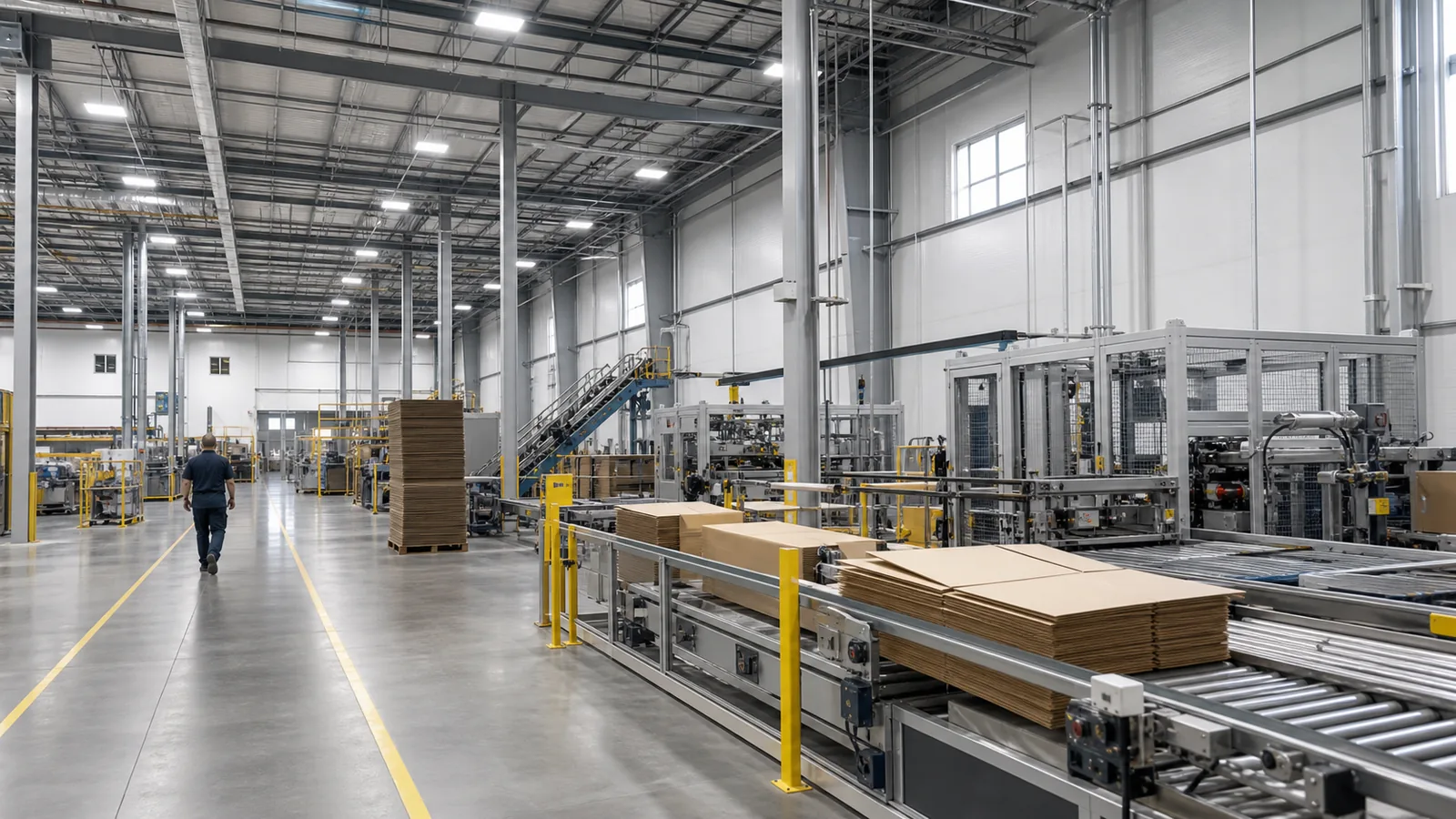
A packaging facility is more than an open industrial building. Production may move through corrugators, printers, die cutters, folder-gluers, filling equipment, case packers, palletizers, conveyors, quality-control stations, and finished-goods staging before material reaches a dock. A painting scope has to recognize those connected work areas and the consequences of blocking access between them.
The first walkthrough should identify which departments can stop, which must remain active, how materials move through the plant, and where painters can stage equipment without interfering with production. That operational map helps divide the project into practical zones instead of treating the entire building as one uninterrupted painting area.
Corrugated plants, converting areas, and packing lines
Corrugated and paper-based packaging operations can have tall converting spaces, stacked sheet or roll material, overhead dust, busy forklift routes, and machinery with limited clearance. Contract packaging and assembly plants may have lower production lines but more frequent product changes, temporary staging, pedestrian activity, and finished packages moving between departments.
These differences affect access and sequencing. Walls behind fixed lines may need a different approach from open perimeter walls. Columns beside traffic aisles may require short work windows and durable, cleanable finishes. Overhead work may need to be isolated from exposed materials and coordinated with housekeeping before production resumes.
Dust, residue, and surface preparation
Paper fibers, cardboard dust, oils, dirt, adhesive residue, and ordinary production soil can keep a new coating from bonding correctly. Dust on roof decks, joists, conduit, and wall ledges also makes it difficult to evaluate the surface beneath it. Cleaning requirements should be defined before product selection or schedule assumptions are finalized.
Preparation may include HEPA-filtered vacuuming where appropriate, controlled washing, detergent cleaning, degreasing, scraping loose coatings, sanding transitions, treating localized corrosion, patching damaged wall areas, and applying primers compatible with the substrate and selected finish. The exact method depends on the surface, contamination, nearby equipment, and facility rules.
High ceilings, roof decks, and structural steel
Packaging plants often use large high-bay spaces for converting equipment, product storage, and material movement. Roof decks, joists, columns, wall panels, mezzanine steel, and other elevated surfaces can become faded, dusty, stained, or corroded over years of operation. Painting these areas requires more than adding lift time to a wall-painting estimate.
A useful access plan identifies lift types, floor capacity, overhead utilities, fire sprinklers, lighting, conveyors, rack clearances, and areas where equipment cannot travel. Steel conditions should be reviewed for rust, failed coatings, sharp edges, and difficult connections. Areas above equipment may require separate containment and protection plans.
Protecting equipment, products, and packaging materials
Overspray, dust, drips, and preparation debris cannot be allowed to migrate onto production equipment or stored packaging. The scope should identify what can be moved, what must be covered, where temporary barriers are practical, and how air movement may carry dust or coating particles beyond the immediate work zone.
Protection planning may include masking machinery, isolating conveyors, covering adjacent inventory, controlling lift travel, closing nearby doors, and coordinating ventilation with plant personnel. Protective materials and work zones should be removed carefully so the facility can inspect the area before releasing it back to production.
Shutdowns, weekends, and phased work
Some packaging plants have a scheduled annual shutdown. Others can only release one line, wall, aisle, or department at a time. Weekend and overnight work may create useful windows, but access time has to include preparation, masking, application, drying, cleanup, inspection, and safe restart rather than coating application alone.
Phased work can be organized by production line, elevation, department, or building zone. The plan should document who releases each area, when equipment can be covered, where painters enter, how lifts move, and what conditions must be met before operations resume. Clear handoffs reduce surprises for both the painting crew and plant staff.
Walls, columns, corridors, and support spaces
Production walls and columns receive the most attention, but support spaces also affect how a facility looks and functions. Maintenance rooms, quality labs, corridors, break areas, offices, restrooms, utility spaces, receiving areas, and visitor routes may all be part of a broader plant-maintenance project.
Different areas can call for different finish priorities. A production wall may emphasize visibility and cleanability. A column beside forklift traffic may need easy maintenance and alignment with an established safety-color program. Offices and common areas may need a commercial interior finish coordinated with ongoing plant operations.
Coating selection and maintenance expectations
There is no single coating specification for every packaging plant. Product selection depends on the substrate, prior coating, cleaning routine, abrasion, humidity, temperature, exposure, appearance goals, and the time available before the area returns to service. A dry warehouse wall and a frequently cleaned production-support area may not need the same finish.
Facility teams should also consider how future touchups will be handled. Documenting colors, sheen, coating products, and repaired areas can make maintenance more consistent. The final recommendation should follow a site review and manufacturer requirements rather than a generic industry label.
Packaging plant floors and traffic markings
Packaging operations depend on clear movement between raw-material storage, production equipment, work cells, finished-goods staging, and shipping. Floor work may include traffic aisles, pedestrian routes, work-zone markings, dock approaches, concrete floor coatings, epoxy systems, or selected repairs around heavily used areas.
Floor projects require their own evaluation of slab condition, contamination, moisture considerations, preparation, forklift traffic, slip needs, and cure-time windows. Visit industrial floor coatings to compare coating and marking options, or review industrial concrete floor polishing when an exposed concrete finish may fit the space.
Warehouse, dock, and exterior painting
Many packaging plants combine manufacturing, warehousing, and shipping under one roof. The project may extend from production walls into rack areas, loading docks, dock doors, bollards, canopies, exterior metal panels, masonry, and employee entrances. These surfaces face different traffic and weather conditions from the production interior.
Coordinating related areas under one facility plan can reduce repeated setup, but each portion still needs appropriate preparation and access planning. See warehouse painting for high-bay storage and dock considerations and metal building painting for exterior metal surfaces.
What to review during the first walkthrough
A productive walkthrough should cover the surfaces and square footage, current coating condition, corrosion or damage, production schedule, sanitation and housekeeping requirements, equipment clearances, lift access, ventilation, stored materials, traffic routes, shutdown windows, and any owner specifications. Photos and plant drawings can help clarify areas that are difficult to inspect while equipment is running.
It is also useful to identify the facility contacts responsible for operations, safety, maintenance, and final area release. Larger projects may require a written phasing plan, product submittals, sample areas, color approval, and coordination meetings before work begins.
Packaging facility painting across Dallas-Fort Worth
DFW Industrial Painting accepts packaging and manufacturing facility estimate requests across Dallas, Fort Worth, Arlington, Irving, Grand Prairie, Garland, Mesquite, Plano, and surrounding North Texas industrial markets. Larger regional projects may be considered when the scope and schedule make travel practical.
For a broader overview of plant walls, structural steel, maintenance areas, shutdown work, and production coordination, return to the manufacturing facility painting hub or review the complete Dallas-Fort Worth service area.
FAQ
Common project questions
Industrial Manufacturing
Manufacturing painting by industry
Packaging Facility Painting Estimate
Tell us about the plant, surfaces, and production schedule.
Share the facility location, approximate size, affected areas, current coating condition, access restrictions, and available shutdown windows. Photos or plans can help make the first scope conversation more productive.
Project Consultation
Planning a packaging facility painting project?
Share the plant location, affected surfaces, production schedule, access limits, and available shutdown windows. We will start with the facility conditions that shape a realistic scope.