beverage plant painting Dallas-Fort Worth
Beverage Plant Painting in Dallas-Fort Worth
Painting for bottling, canning, filling, packaging, warehouse, and production-support areas with planning around sanitation, moisture, equipment protection, and line schedules.
Who this service is for
Beverage manufacturers, bottlers, canning facilities, production managers, sanitation teams, maintenance leaders, and facility engineers planning building-surface maintenance around active lines.
Surface preparation
Beverage facilities may expose building surfaces to moisture, condensation, cleaning compounds, oils, sugar or product residue, and repeated temperature changes. Preparation must follow the facility's sanitation controls and may include approved cleaning, removal of failed coatings, patching, corrosion treatment, and compatible primers.
Safety and access planning
Planning should address product removal or isolation, equipment coverings, drains, wet floors, air movement, electrical clearances, cleaning schedules, refrigeration, line access, chemical restrictions, lockout procedures, and the facility's sanitation release process.
Why choose DFW Industrial Painting
DFW Industrial Painting scopes beverage facilities around line schedules, wet-area exposure, equipment protection, sanitation turnover, and owner-approved coating documentation instead of treating the project as an ordinary commercial repaint.
Painting around bottling, canning, and filling lines
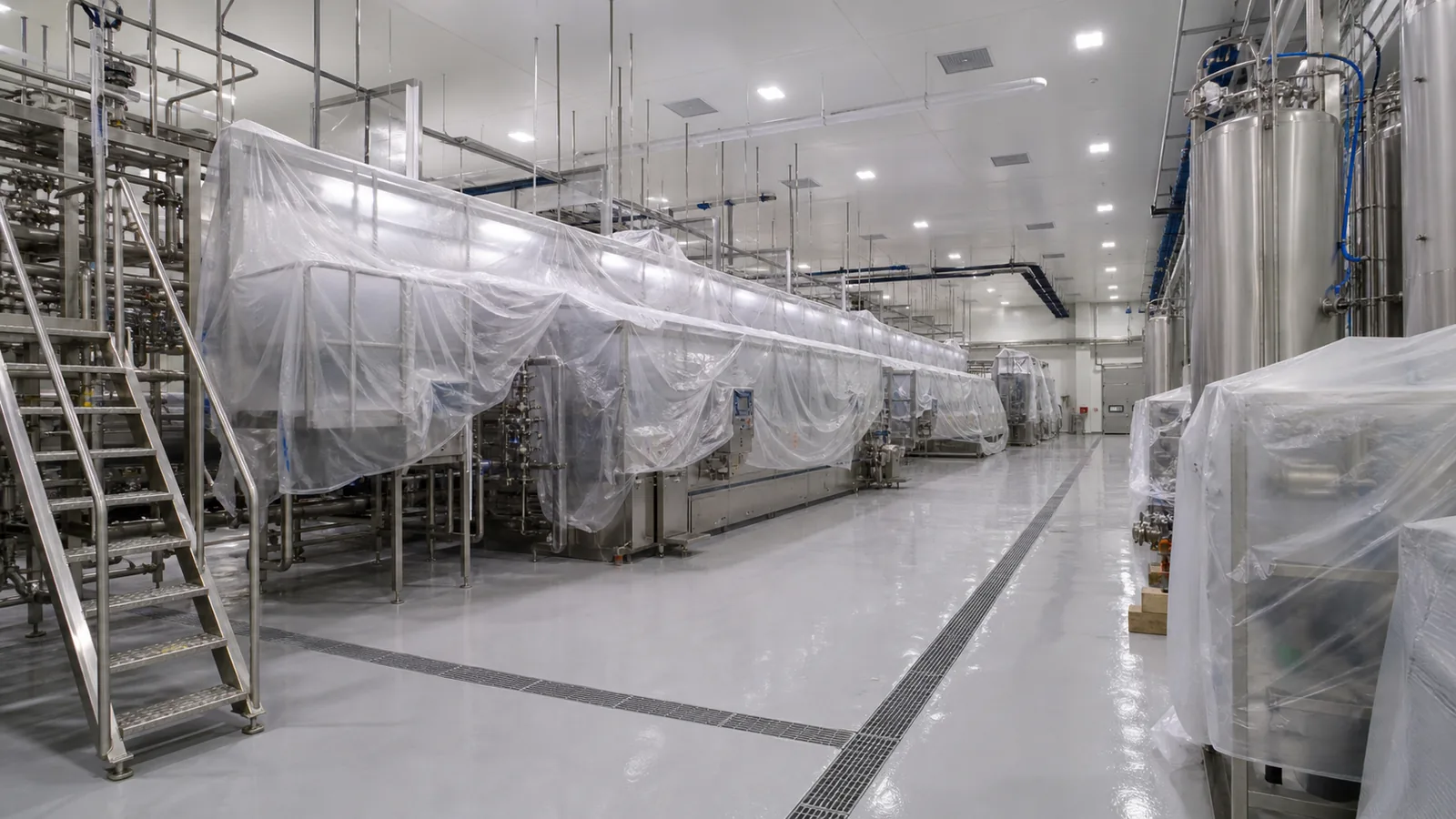
Beverage production connects ingredient handling, processing, filling, capping or seaming, labeling, packing, palletizing, warehousing, and shipping. Painting one wall or ceiling can affect access to several connected line areas, so the scope should begin with the production sequence and the facility's ability to release each zone.
A walkthrough should identify fixed equipment, overhead piping, conveyors, controls, drains, ventilation, traffic routes, and surfaces hidden behind or above lines. Those conditions determine where crews can work, how equipment is protected, and whether the job is completed in one outage or several phases.
Sanitation and product separation
Painting must be separated from exposed ingredients, product, packaging, and food-contact equipment under the facility's sanitation program. The owner should establish the required shutdown, product removal, barriers, access controls, equipment coverings, contractor hygiene procedures, and authority for releasing the area.
After application, the schedule may include removal of protection, contractor cleanup, facility cleaning or sanitation, inspection, and documented turnover before production restarts. A short maintenance window must account for all of those steps, not just coating dry time.
Moisture, condensation, and washdown exposure
Beverage rooms can expose walls, ceilings, curbs, doors, and structural surfaces to frequent cleaning, humidity, cold surfaces, steam, and condensation. Persistent moisture or leaks should be corrected before painting because a coating cannot solve an active building or process condition.
Product selection depends on the substrate, temperature, cleaning method, chemicals identified by the owner, expected moisture, existing system, and return-to-service window. Manufacturer documentation and facility approval should guide the decision rather than a generic sanitary-coating label.
Equipment and utility protection
Stainless equipment, fillers, conveyors, sensors, motors, panels, piping, drains, and refrigeration components may sit close to the building surfaces being painted. The scope should identify what can be moved, what must remain accessible, what cannot be coated, and how coverings avoid interfering with safety or sanitation systems.
Overhead work requires particular attention because preparation debris or droplets can travel beyond the immediate surface. Temporary isolation, controlled application methods, ventilation coordination, and inspection of horizontal equipment surfaces may be part of the turnover plan.
Production walls, ceilings, and support rooms
Projects may include sealed masonry, panels, concrete, ceilings, columns, curbs, doors, maintenance rooms, compressor spaces, quality areas, laboratories, corridors, locker areas, offices, and break rooms. Different rooms have different exposure and cleaning needs and should not be forced into one coating specification.
The scope should document peeling or scaling coatings, corrosion, impact damage, failed joints, porous repairs, and areas affected by condensation. Samples and submittals can help the owner confirm color, sheen, cleanability expectations, and compatibility before broad application.
Shutdown and phased scheduling
Some beverage plants use a planned sanitation day or maintenance shutdown. Others need work completed one room, line, elevation, or support area at a time. Each phase should identify the release time, protection requirements, application window, drying conditions, cleanup, sanitation, and restart responsibility.
If the available window does not fit the selected system, the plan must change. Options may include a different phase boundary, additional shutdown time, or a coating system supported by the manufacturer for the actual conditions.
Warehouse, dock, and floor services
Finished-goods warehouses, pallet staging, loading docks, and dry storage often connect directly to beverage production. Related painting can include high-bay walls, ceilings, doors, bollards, canopies, and traffic areas while remaining coordinated with shipping schedules.
Floor work requires separate review of concrete condition, moisture, drains, traffic, cleaning, slip concerns, and cure windows. See industrial floor coatings and warehouse painting for those connected scopes.
Preparing a beverage plant estimate
Helpful information includes the facility and process type, affected rooms, surface materials, photos, cleaning procedures and chemicals, moisture conditions, production hours, shutdown dates, equipment-protection requirements, owner-approved products, and desired schedule.
DFW Industrial Painting accepts beverage and manufacturing facility requests across Dallas-Fort Worth and North Texas. Return to food processing facility painting for related sanitation planning or the manufacturing facility painting hub.
FAQ
Common project questions
Industrial Manufacturing
Manufacturing painting by industry
Beverage Plant Painting Estimate
Tell us about the plant, surfaces, and production schedule.
Share the facility location, approximate size, affected areas, current coating condition, access restrictions, and available shutdown windows. Photos or plans can help make the first scope conversation more productive.
Project Consultation
Planning a beverage plant painting project?
Share the production areas, surfaces, cleaning exposure, line schedule, shutdown window, sanitation restrictions, and owner specifications for a focused estimate review.