chemical plant painting Dallas-Fort Worth
Chemical Plant Painting in Dallas-Fort Worth
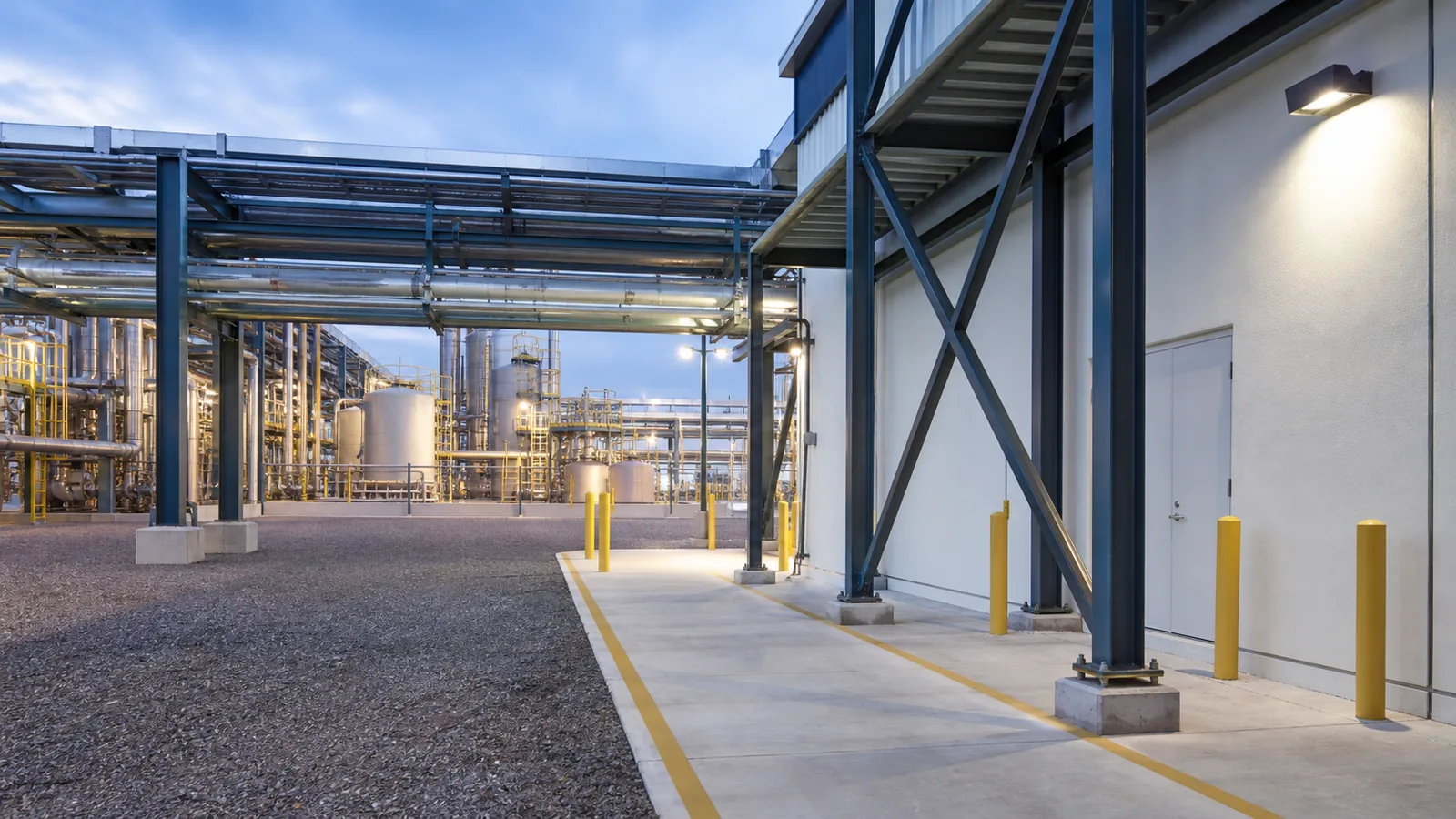
Facility painting for chemical manufacturing and process-support buildings with owner-led planning for process isolation, hazardous areas, ventilation, permits, access, and coating compatibility.
Who this service is for
Chemical manufacturers, process facilities, plant engineers, maintenance managers, EHS teams, and operations leaders evaluating painting for buildings, non-process surfaces, structural steel, and support areas.
Surface preparation
Chemical facilities may have corrosion, weathering, process residue, oils, prior coatings, and surfaces whose exposure is not obvious from appearance. The owner must identify hazards and decontamination status before preparation methods, primers, or coatings are selected.
Safety and access planning
All work must remain inside the plant's permit, process-safety, hazardous-location, lockout, line-breaking, ventilation, ignition-control, PPE, emergency, and contractor-management requirements. DFW Industrial Painting does not classify process areas or authorize work around chemicals.
Why choose DFW Industrial Painting
DFW Industrial Painting treats chemical-plant work as owner-controlled industrial maintenance, with the facility defining hazards, isolation, approved products, work boundaries, and release conditions before painting begins.
Owner-controlled work in process environments
Chemical manufacturing sites can contain operating processes, storage, transfer systems, utilities, laboratories, maintenance areas, warehouses, offices, and exterior structures with very different hazards. A painting scope begins only after the facility identifies where contractor work is permitted and what process, atmospheric, and contamination controls apply.
The owner should define work boundaries, required permits, area classification, isolation status, emergency procedures, contractor orientation, approved equipment, and release authority. A visual walkthrough alone is not enough to determine whether a process-adjacent area is safe for preparation or coating.
Hazardous locations and ignition control
Some chemical facilities contain areas where flammable gases, vapors, liquids, dusts, or residues require classified equipment and strict ignition control. Painting materials and powered preparation equipment can introduce additional hazards. The facility's qualified personnel must determine the classification and acceptable tools and methods.
Work should not proceed on assumptions based on distance from a vessel or pipe. Ventilation, monitoring, bonding or grounding, material storage, hot-work separation, and shutdown requirements are established through the owner's program and the selected coating's safety documentation.
Decontamination and surface release
Building steel, walls, floors, curbs, and supports may have process deposits or unknown contamination. The facility must identify, clean, decontaminate, test, or release surfaces as required before a painting crew disturbs them. Coating contractors should not be expected to identify an unknown chemical by appearance.
Once released, preparation may include approved washing, degreasing, removal of loose coatings, corrosion treatment, abrasion, patching, and compatible primers. Waste handling, spent abrasives, rags, coverings, and wash water remain subject to the site's environmental and disposal procedures.
Corrosion and coating compatibility
Corrosion can result from weather, moisture, chemical exposure, leaks, damaged coatings, or incompatible prior repairs. The source and severity should be evaluated before repainting. Some surfaces may need engineering, insulation, containment, or process repairs outside the painting scope.
The facility should provide exposure information and owner specifications so coating manufacturers can support a recommendation. Generic chemical-resistant claims are not enough; concentration, temperature, splash, vapor, immersion, cleaning, substrate, and cure conditions can all affect suitability.
Structural steel and process-support buildings
Potential work can include exterior frames, pipe-rack-adjacent building steel, warehouses, maintenance shops, utility buildings, control buildings, laboratories, offices, doors, panels, canopies, and non-process walls. Process equipment and piping should not be included unless specifically engineered, isolated, and authorized.
Elevated access must account for pipe racks, cable trays, vessels, traffic, restricted zones, fall protection, emergency routes, and equipment limitations. The estimate should distinguish ordinary building access from specialty process-area access.
Turnarounds, outages, and phased maintenance
A turnaround may provide access to areas unavailable during operation, but it also concentrates contractors, permits, equipment, and schedule pressure. Painting must be coordinated with operations, scaffolding, inspection, insulation, mechanical work, hot work, and other trades.
The schedule should include area release, access setup, preparation, application, cure time, inspection, cleanup, waste removal, and owner turnover. Phased maintenance outside a turnaround may be possible only within boundaries explicitly approved by the plant.
Documentation and contractor coordination
A chemical-facility proposal may require safety data, product data, coating-system details, contractor qualifications, training records, insurance, job-hazard analysis, equipment lists, respiratory planning, and site-specific procedures. Required documentation should be identified before mobilization.
Daily coordination may include permits, atmospheric or area status supplied by the owner, toolbox meetings, changing process conditions, access releases, and end-of-shift housekeeping. The facility retains authority to stop work or change boundaries.
Starting a chemical plant estimate review
An initial request should describe the facility areas without disclosing sensitive process information, surface types, approximate quantities, coating condition, access, outage dates, owner specifications, approved products, contractor prerequisites, and who controls EHS and operations review.
DFW Industrial Painting can evaluate whether the building-maintenance scope fits available capabilities and the Dallas-Fort Worth service area. See manufacturing facility painting for broader plant work and metal fabrication facility painting for non-process shop environments.
FAQ
Common project questions
Industrial Manufacturing
Manufacturing painting by industry
Chemical Plant Painting Estimate
Tell us about the plant, surfaces, and production schedule.
Share the facility location, approximate size, affected areas, current coating condition, access restrictions, and available shutdown windows. Photos or plans can help make the first scope conversation more productive.
Project Consultation
Evaluating a chemical plant painting scope?
Share the non-confidential facility areas, surfaces, outage timing, access constraints, owner specifications, and contractor qualification requirements for an initial fit review.